


Crowns and Bridges That Restore Your Quality of Life

You can chew comfortably again, enjoy hard foods, and smile with confidence.
Price — from 12,850 UAH
Book a Consultation
A spare tire temporarily solves a problem but doesn’t restore full function or driving comfort. The same applies to your body.

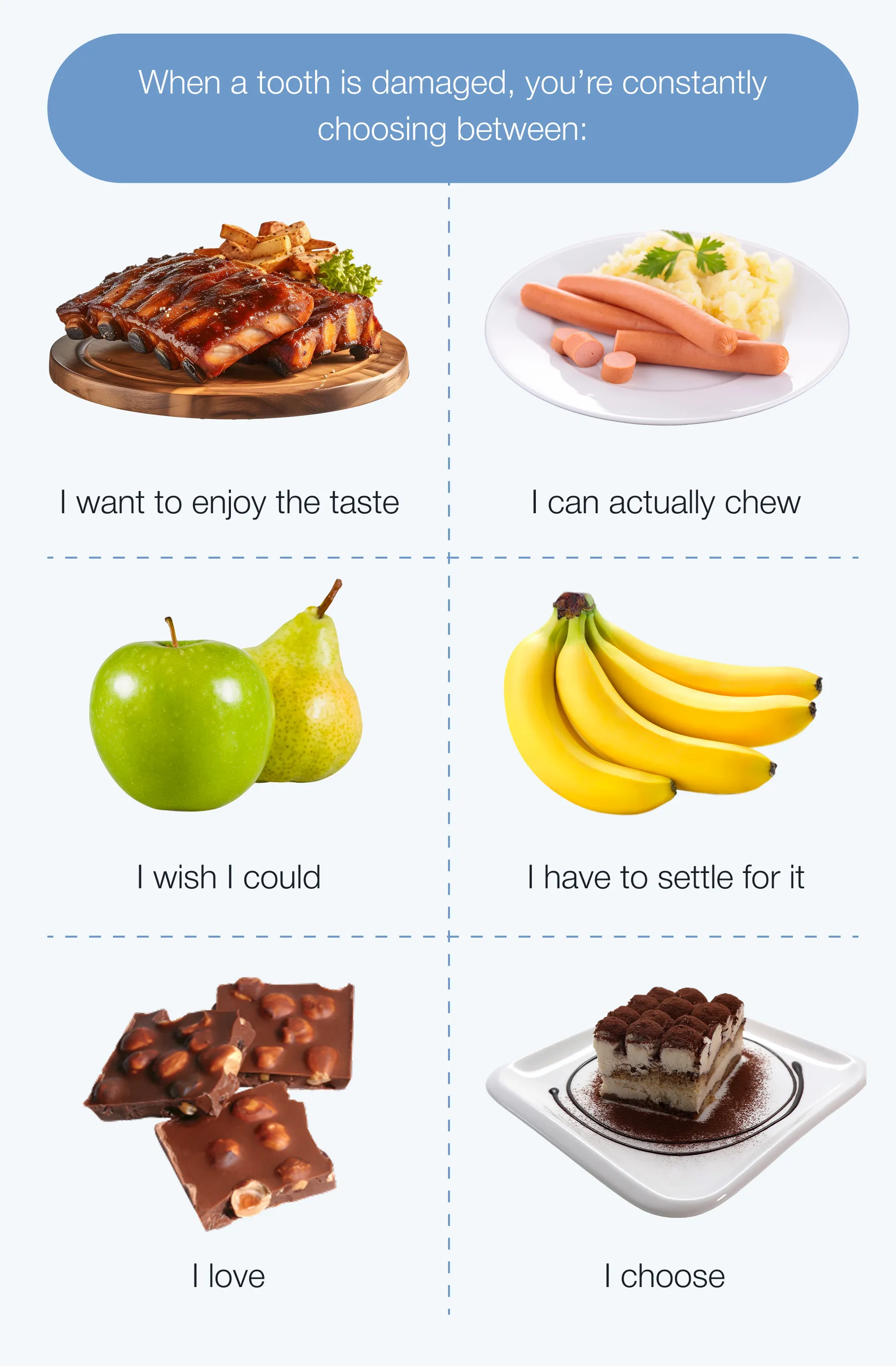
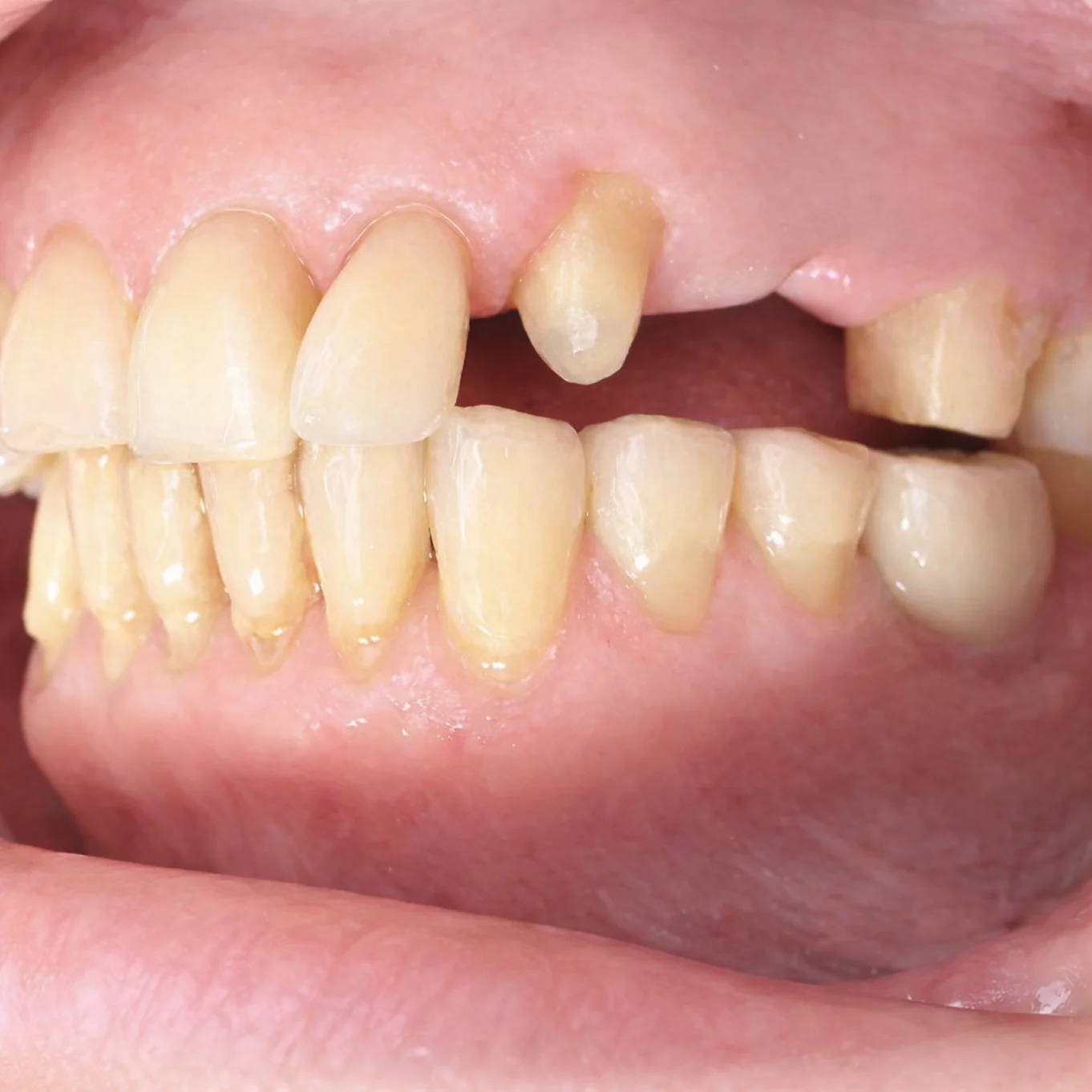
When a tooth is damaged, chewing forces become uneven. You naturally chew on the opposite side, food can get stuck in the affected area, gums may bleed, and bad breath can develop.

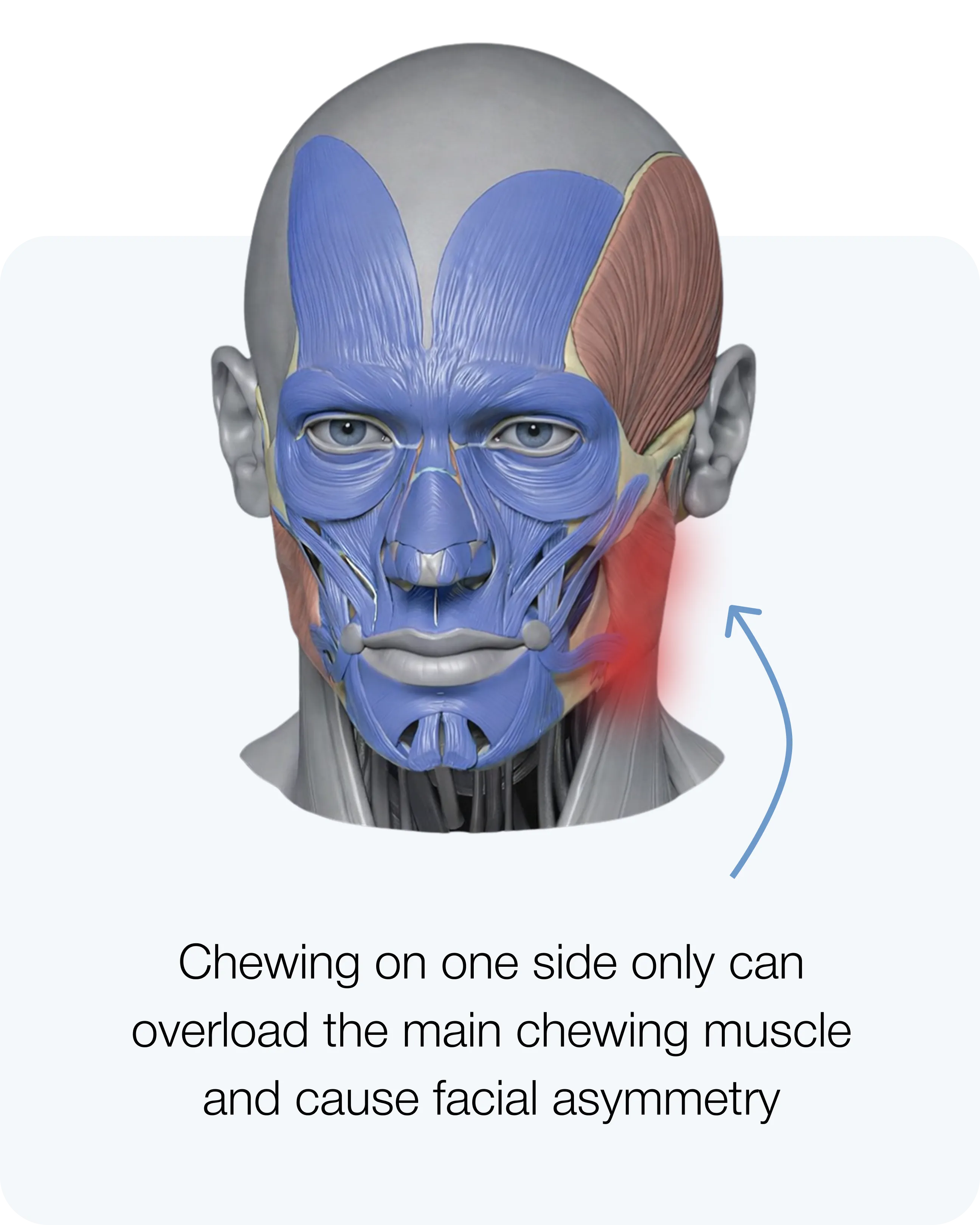
Over time, this can lead to more serious consequences: facial asymmetry, jaw discomfort or pain, and constant attention while eating — you find yourself thinking about what you can and cannot eat. If the damaged tooth is in your smile zone, your confidence can suffer too, making it harder to smile freely.
Why Choose Evora

A damaged tooth is like a flat tire on a car

A spare tire temporarily solves a problem but doesn’t restore full function or driving comfort. The same applies to your body.

When a tooth is damaged, chewing forces become uneven. You naturally chew on the opposite side, food can get stuck in the affected area, gums may bleed, and bad breath can develop.

Over time, this can lead to more serious consequences: facial asymmetry, jaw discomfort or pain, and constant attention while eating — you find yourself thinking about what you can and cannot eat. If the damaged tooth is in your smile zone, your confidence can suffer too, making it harder to smile freely.

The longer the body adapts to a damaged tooth, the more complex the treatment becomes. What could have been a simple restoration may now require reshaping the opposing tooth, orthodontic alignment of neighboring teeth, or even extractions.

That’s why it’s so important to replace or restore a damaged tooth as early as possible.
The longer the body adapts to a damaged tooth, the more complex the treatment becomes. What could have been a simple restoration may now require reshaping the opposing tooth, orthodontic alignment of neighboring teeth, or even extractions.

That’s why it’s so important to replace or restore a damaged tooth as early as possible.

At Evora, all modern prosthetic solutions are available, so we choose the restoration method based on your individual clinical needs.

01 / 03

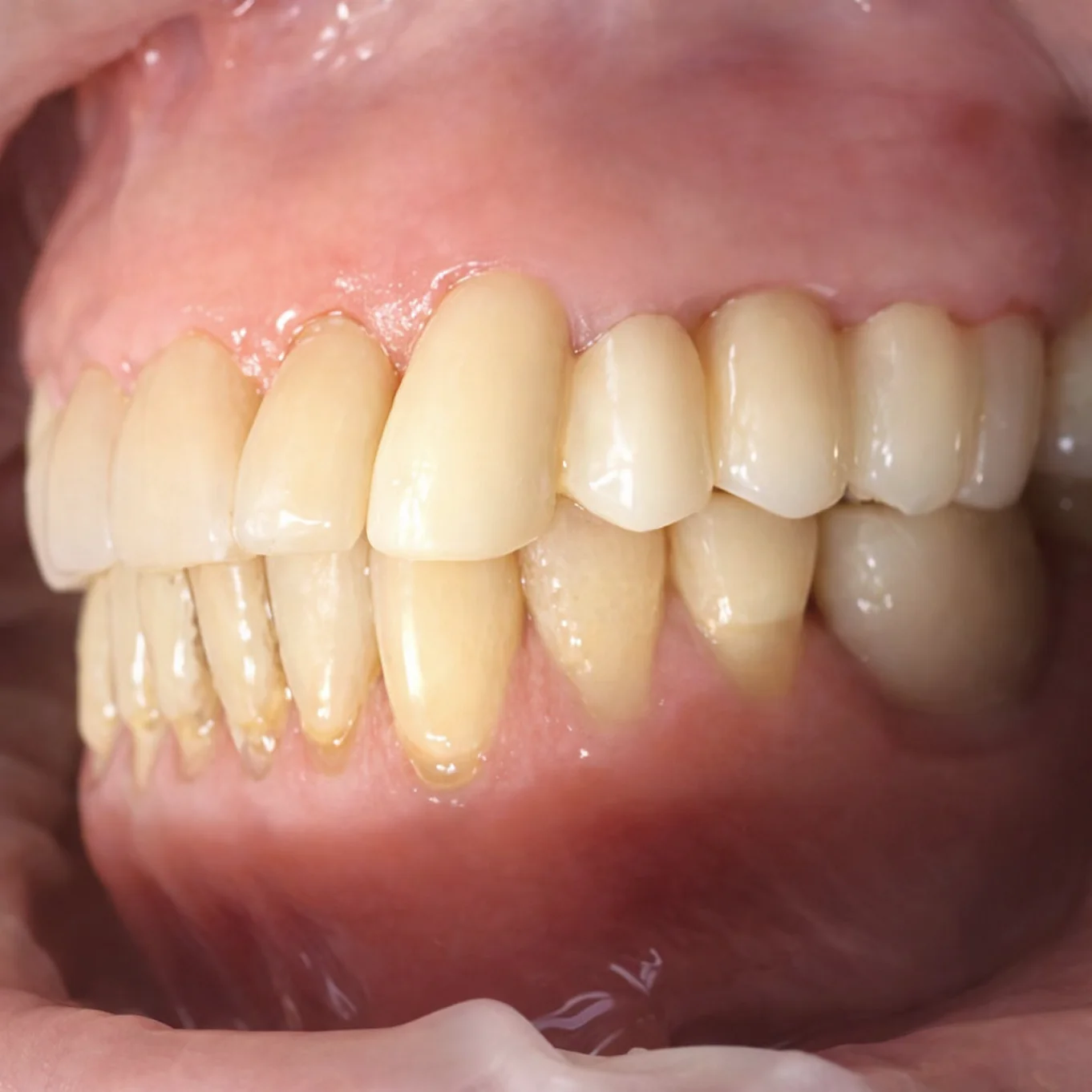
Zirconia or Ceramic Crowns

A strong and predictable solution for restoring severely damaged teeth and stabilizing the bite. Used in cases such as:
when more than 70% of the tooth is damaged;
if the tooth is non-vital — its nerve has been removed;
when adjusting or restoring bite height;
when food constantly gets trapped between large fillings;
when a discolored tooth needs to be covered and a restoration alone doesn’t achieve the desired result.
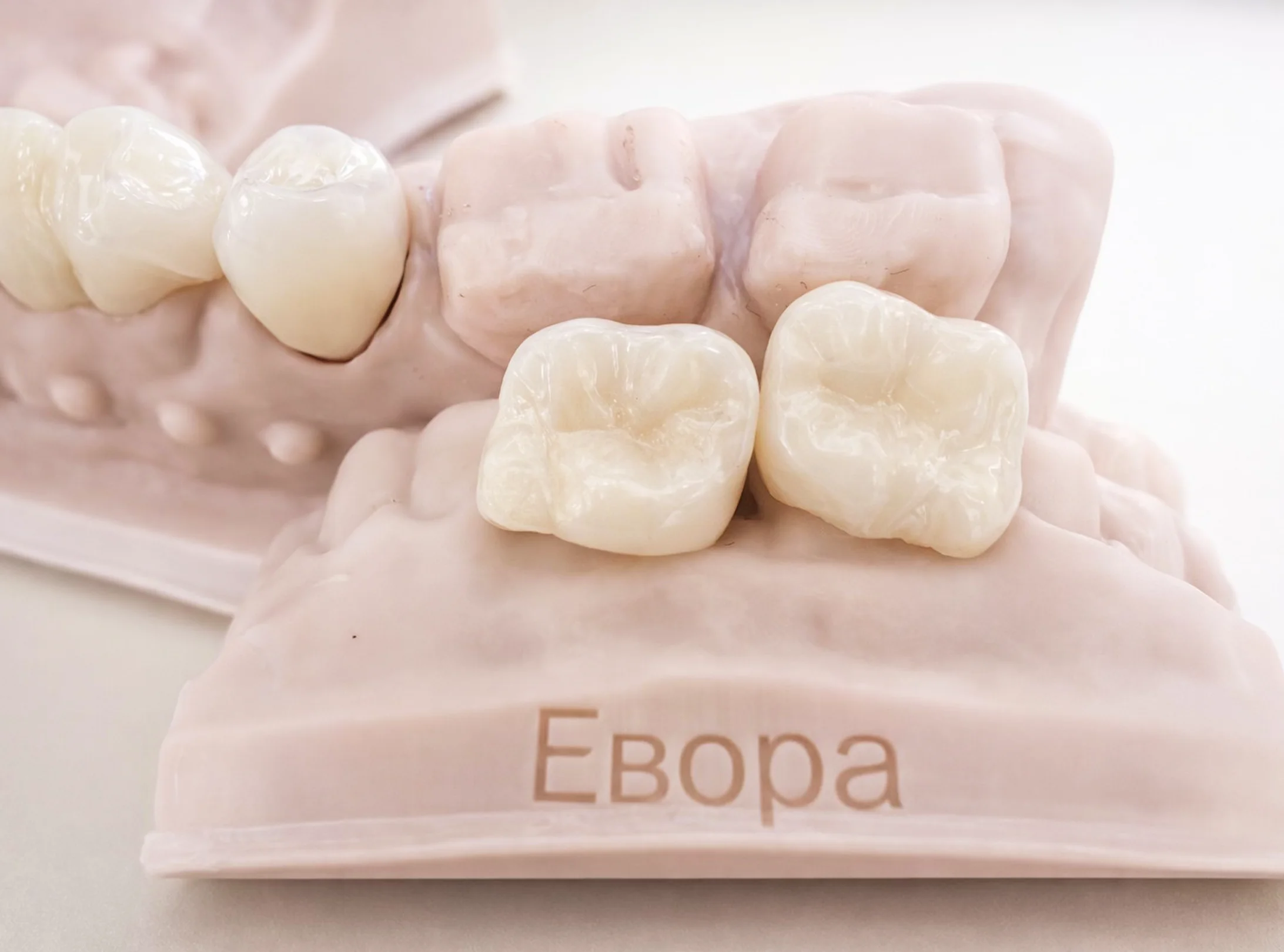
Whether made of ceramic or zirconia, crowns resist discoloration, don’t irritate the gums, and look just as natural as your own teeth. With proper care, they typically last 10–15 years or longer.
Book a Consultation
02 / 03

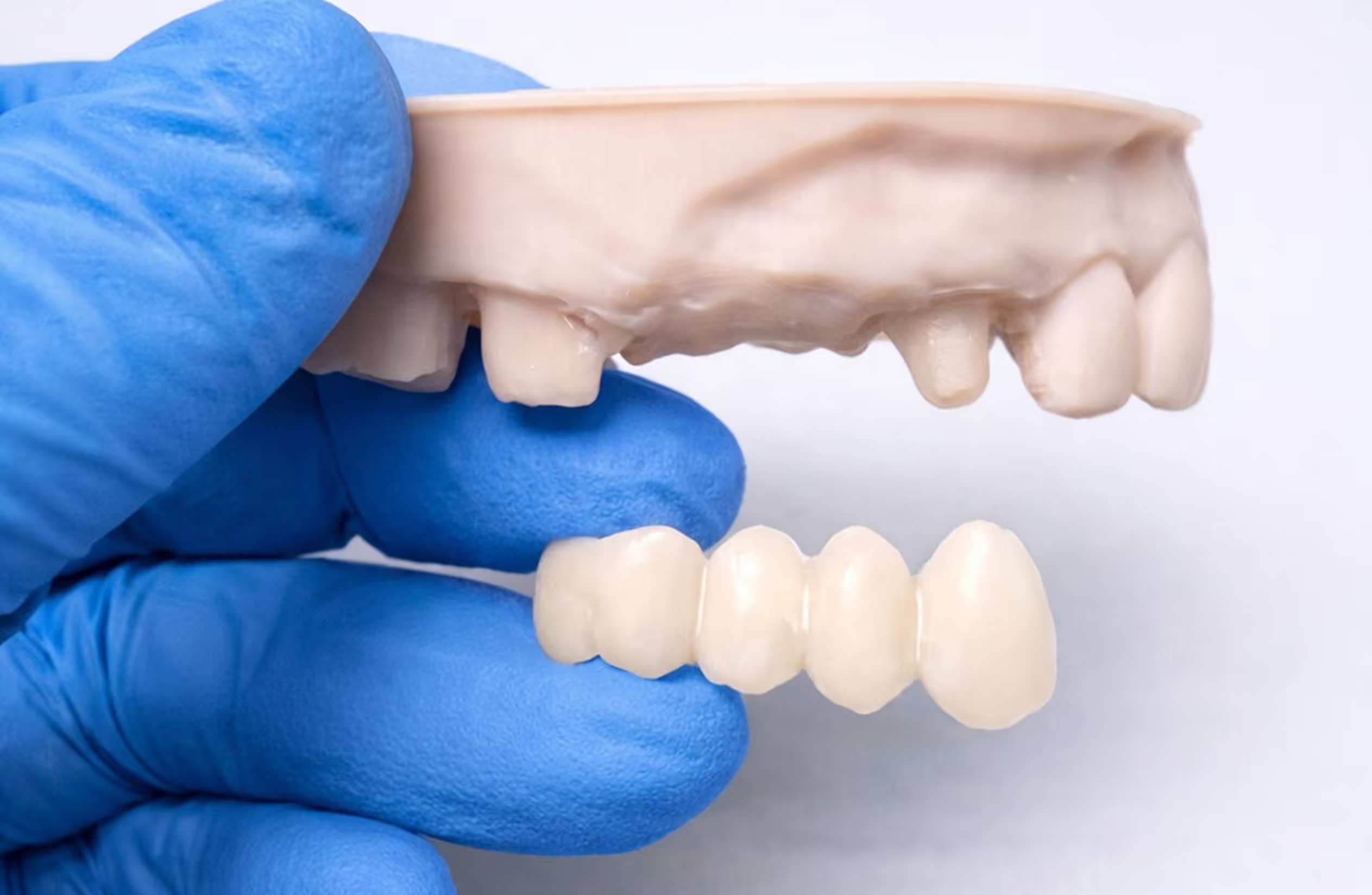
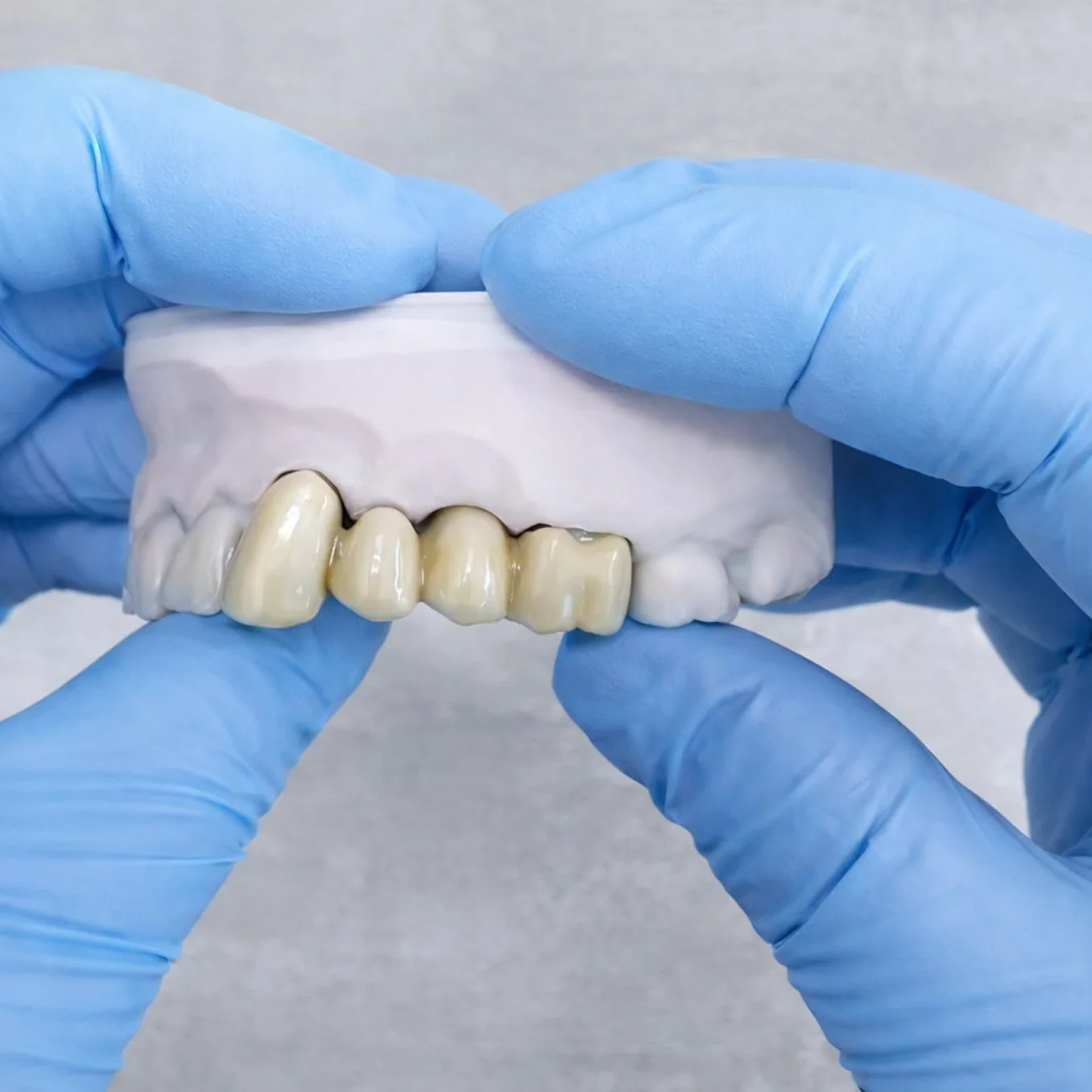
Zirconia Bridges

A fixed restoration that withstands chewing forces, maintains its color over time, and feels completely natural in the mouth. Used in cases such as:
when one or two consecutive teeth are missing;
when placing an implant isn’t possible (insufficient bone, general medical contraindications, or lack of space for an implant);
when the supporting teeth already have fillings or crowns, or require restoration;
when it’s important to quickly restore chewing function and stabilize the dental arch.
The restoration prevents teeth from shifting and bite deformation. It preserves speech, natural facial contours, and looks just as natural as your own teeth. With proper care, it typically lasts 10–15 years or longer.
Book a Consultation
03 / 03

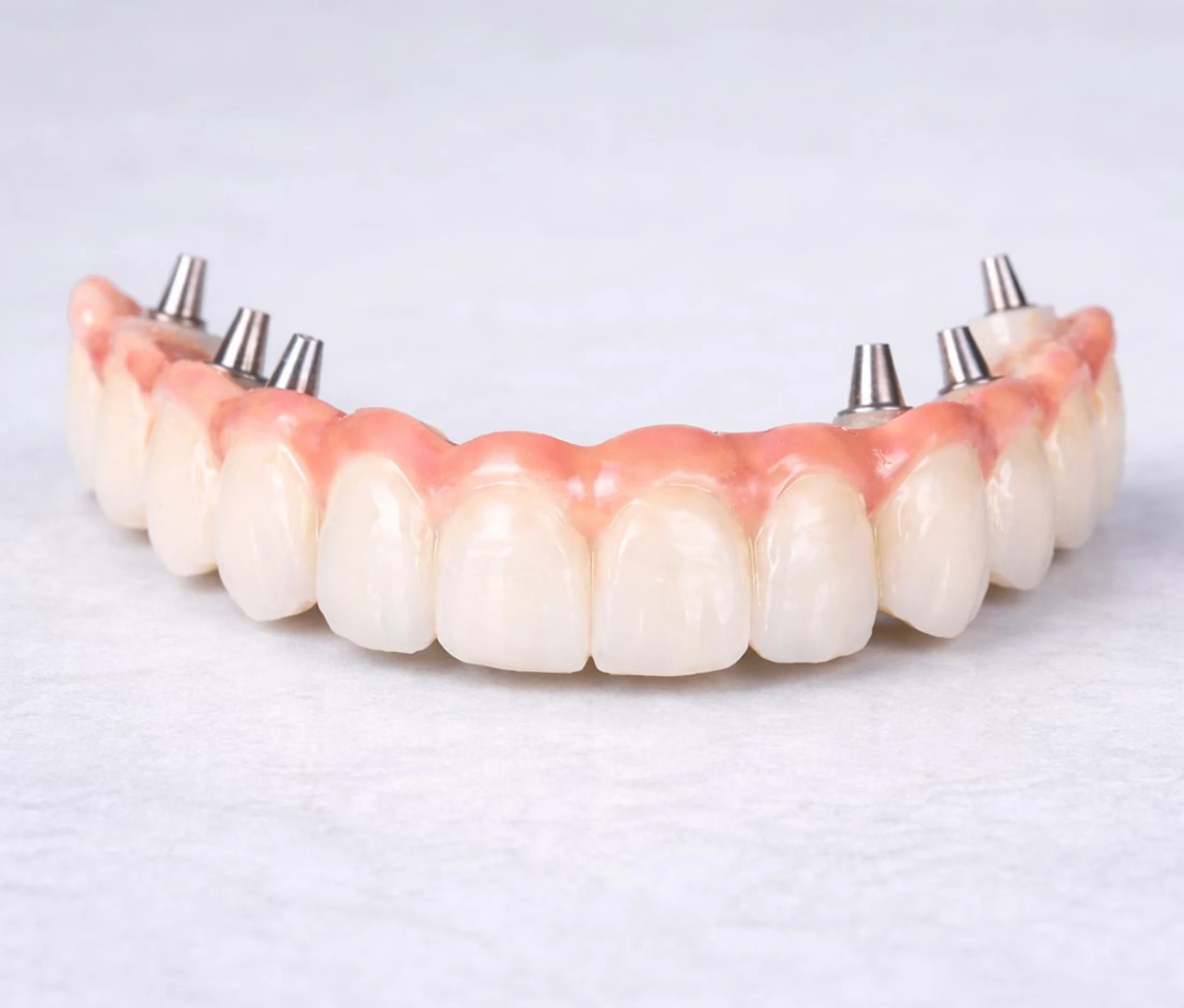
Implant-Supported Prosthetics

We provide prosthetic restorations on implants placed at our clinic, as well as on existing patient implants. When needed, we remove prosthetic structures that have lost function or aesthetics and replace them with new ones.
We Offer the Following Solutions:
ceramic crowns on custom zirconia abutments — most often used in the front teeth;
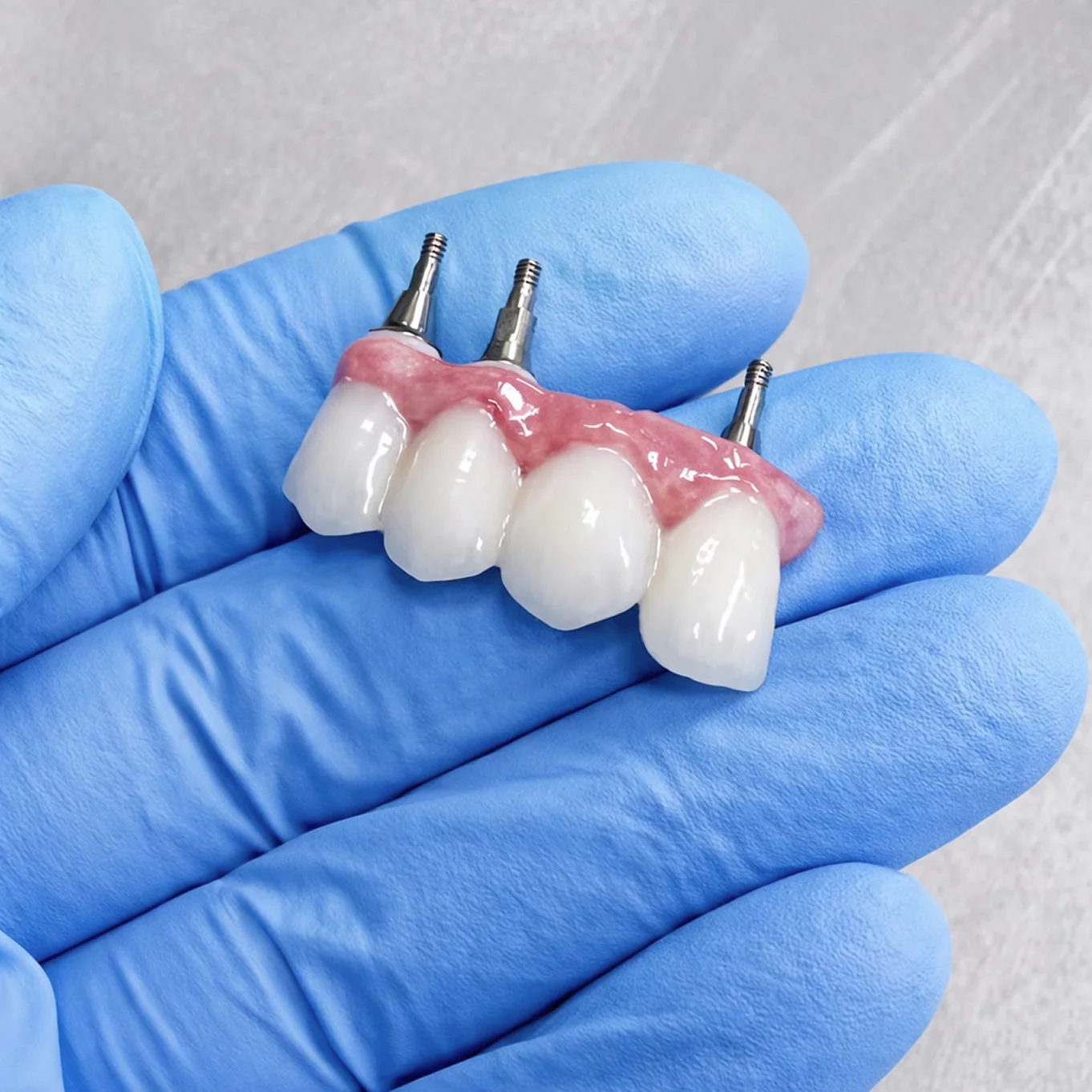
screw-retained zirconia bridges — the ideal solution for molars;
large prosthetic structures on multi-units with a titanium bar — available as both temporary and permanent solutions.
With proper care, these restorations typically last 10–15 years or longer. Thanks to digital scanning, we achieve maximum precision at every stage of treatment. This minimizes errors, ensures an accurate color match, distributes chewing forces correctly, and preserves the natural gum contours — all without inflammation or discomfort.
Book a Consultation

Regain the freedom to eat and smile with confidence again

Book a consultation at Evora — we’ll guide you through every step and ensure your treatment is smooth, calm, and predictable.
To schedule an appointment, please call:

+380 (96) 485 25 25

Or leave a request, and we’ll get in touch with you shortly
Submit a Request

A smile should be not only beautiful but also healthy.

Prosthetics isn’t just about restoring a tooth — it’s about bringing comfort back to your daily life. At Evora, we plan prosthetic solutions to remain comfortable and reliable not just at the start, but for years to come.

Thoughtful Treatment Planning

Before starting prosthetic treatment, we carefully assess the support — the tooth root or an existing implant. If the prognosis is uncertain, we won’t place an expensive prosthetic that might lose stability within a year. Instead, we offer alternative solutions or preparatory treatment steps to ensure a reliable, long-lasting result.

Digital Precision

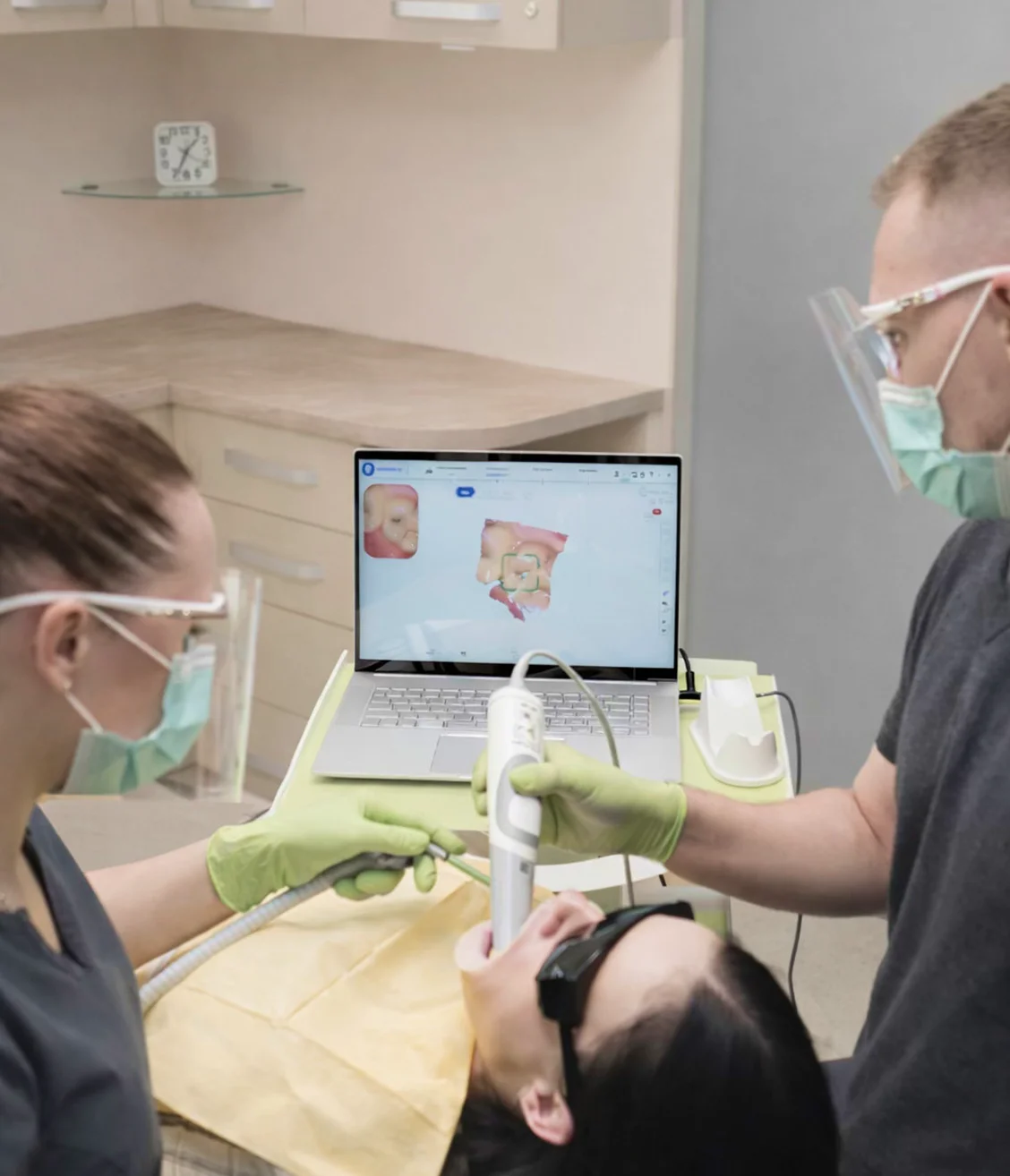
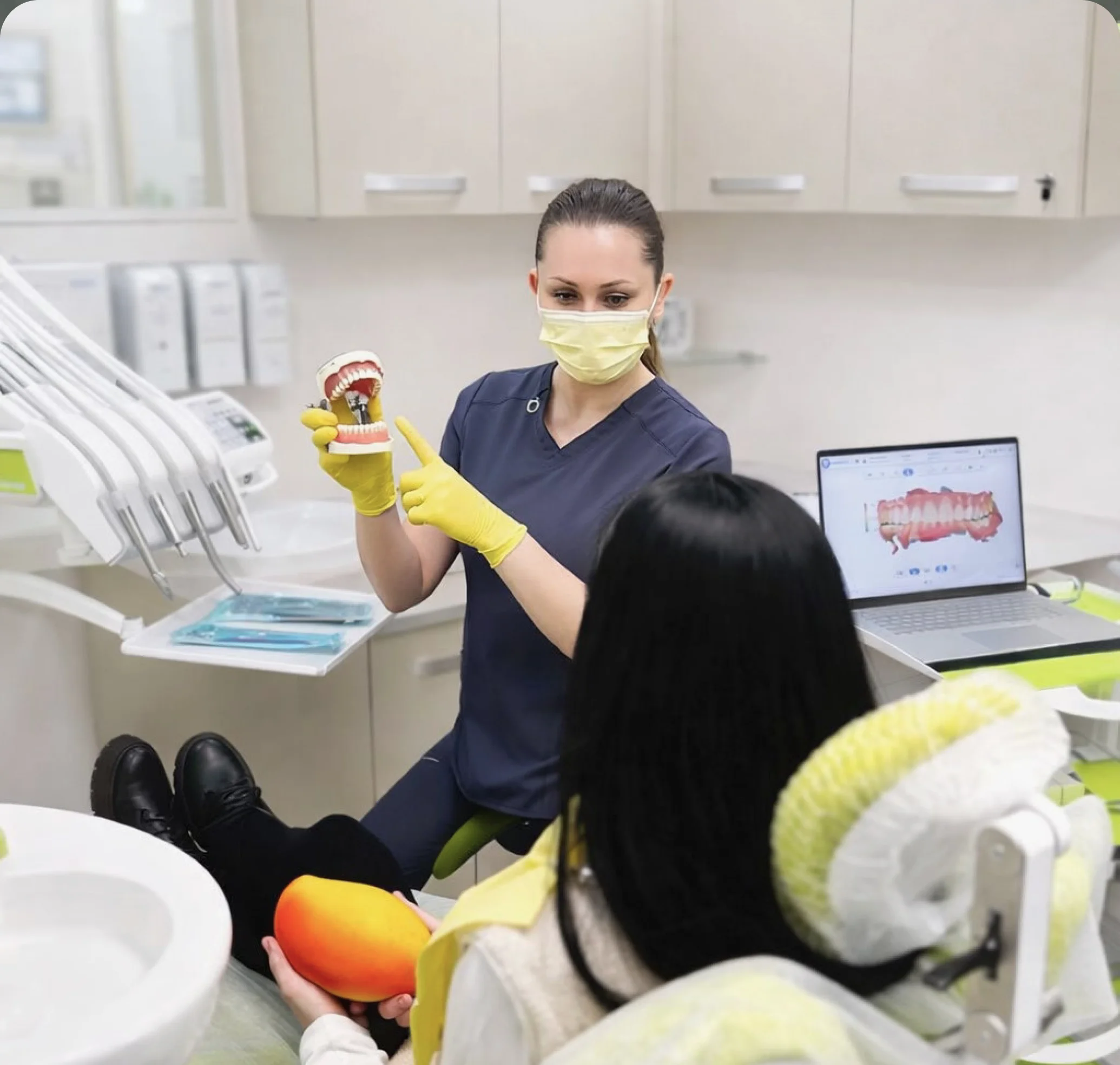
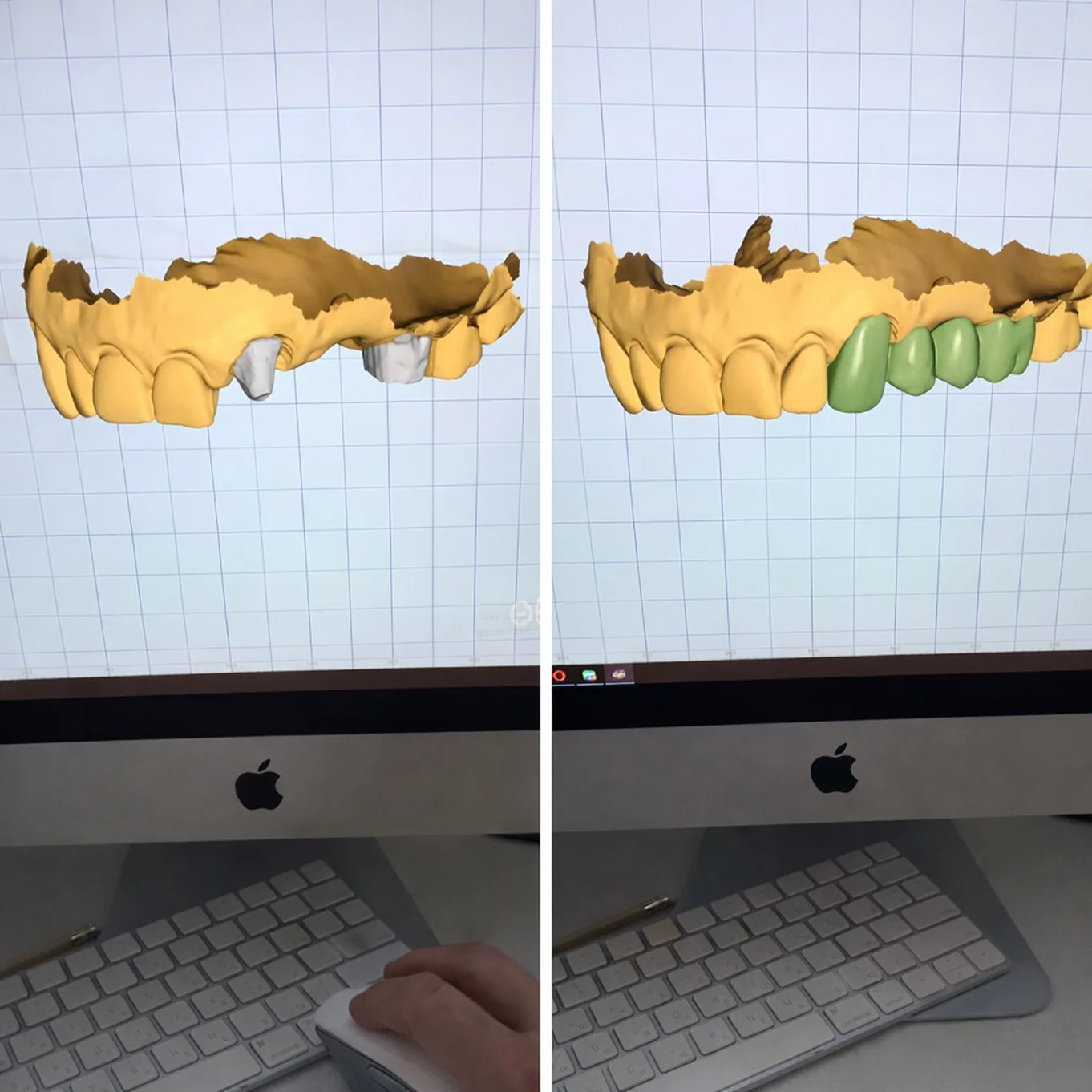
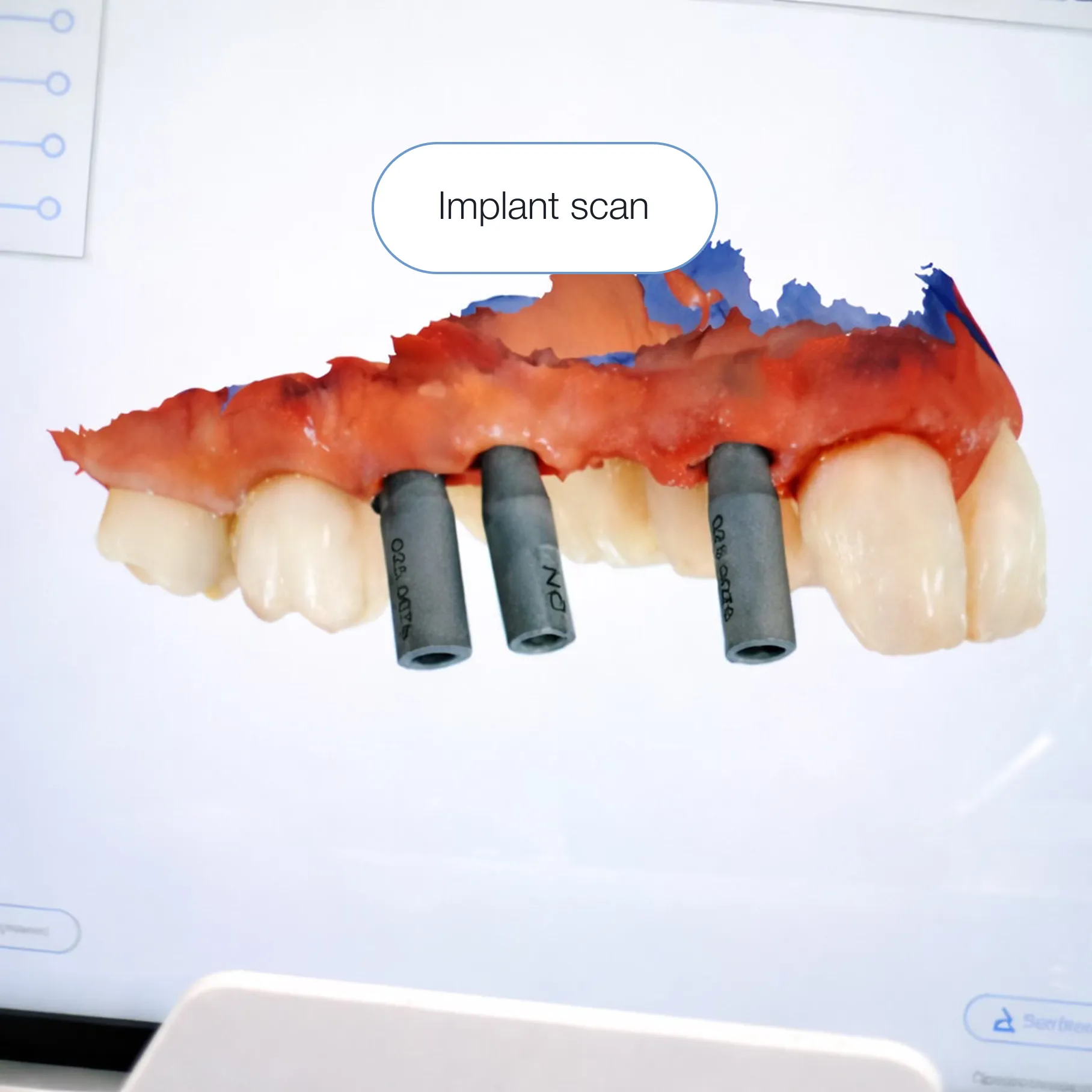
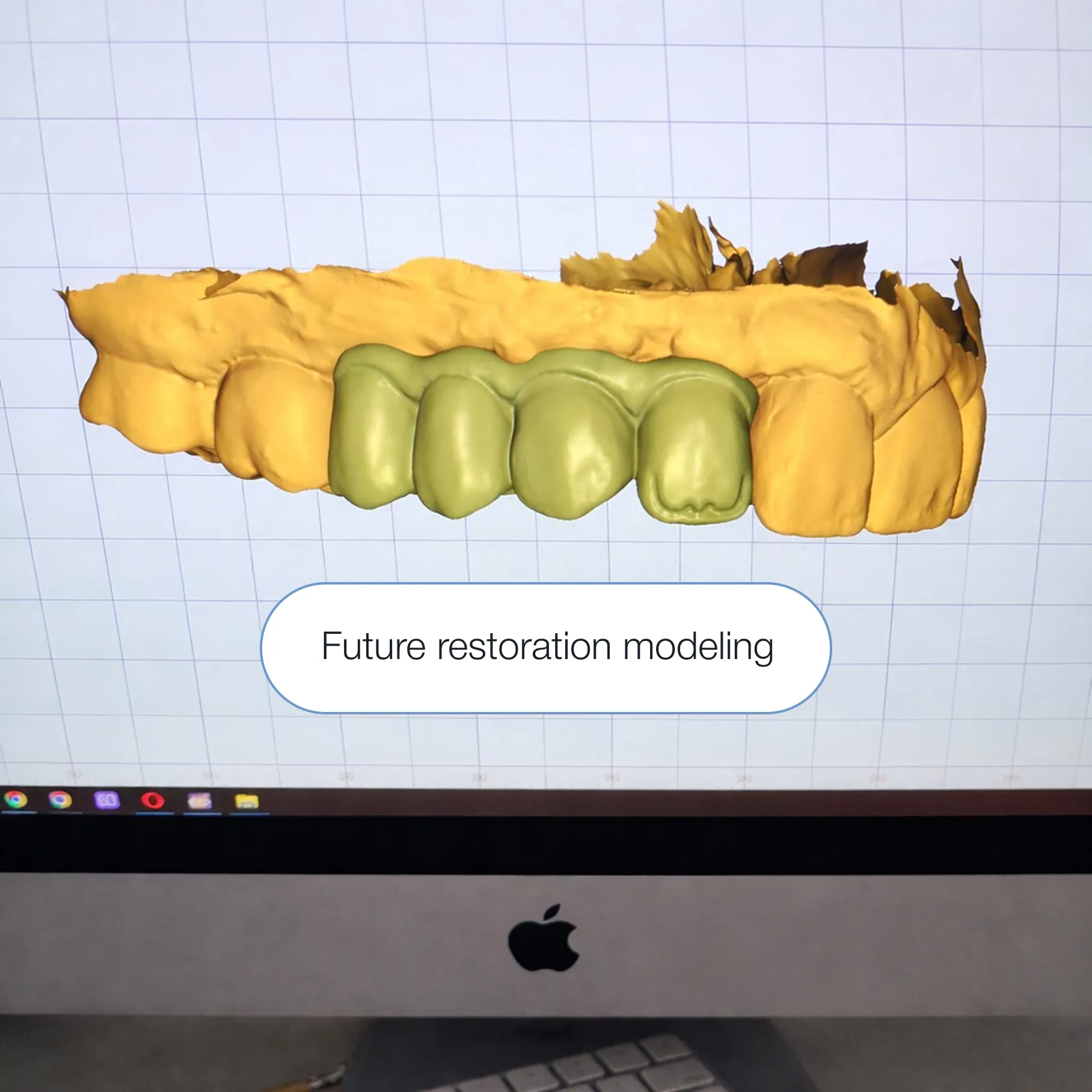
We use 3D scanning instead of traditional impressions. This scan guides the design of the restoration, including bite and contacts, allowing the technician to create a crown or prosthetic with a precise fit — no surprises during placement.

All Types of Prosthetics

We can design and place any modern type of prosthetic restoration, allowing us to choose the solution that’s right for you — not just what’s easiest to perform.

Full Control Over Fabrication

We work with our in-house dental technician, which allows us to oversee every step of fabrication, perform fittings as needed, and provide patients with a temporary restoration until the permanent one is placed.
Step-by-Step Treatment

We explain every step so you understand what’s happening and why it matters.

Zirconia or Ceramic Crowns

scroll →
/ 06

Diagnosis

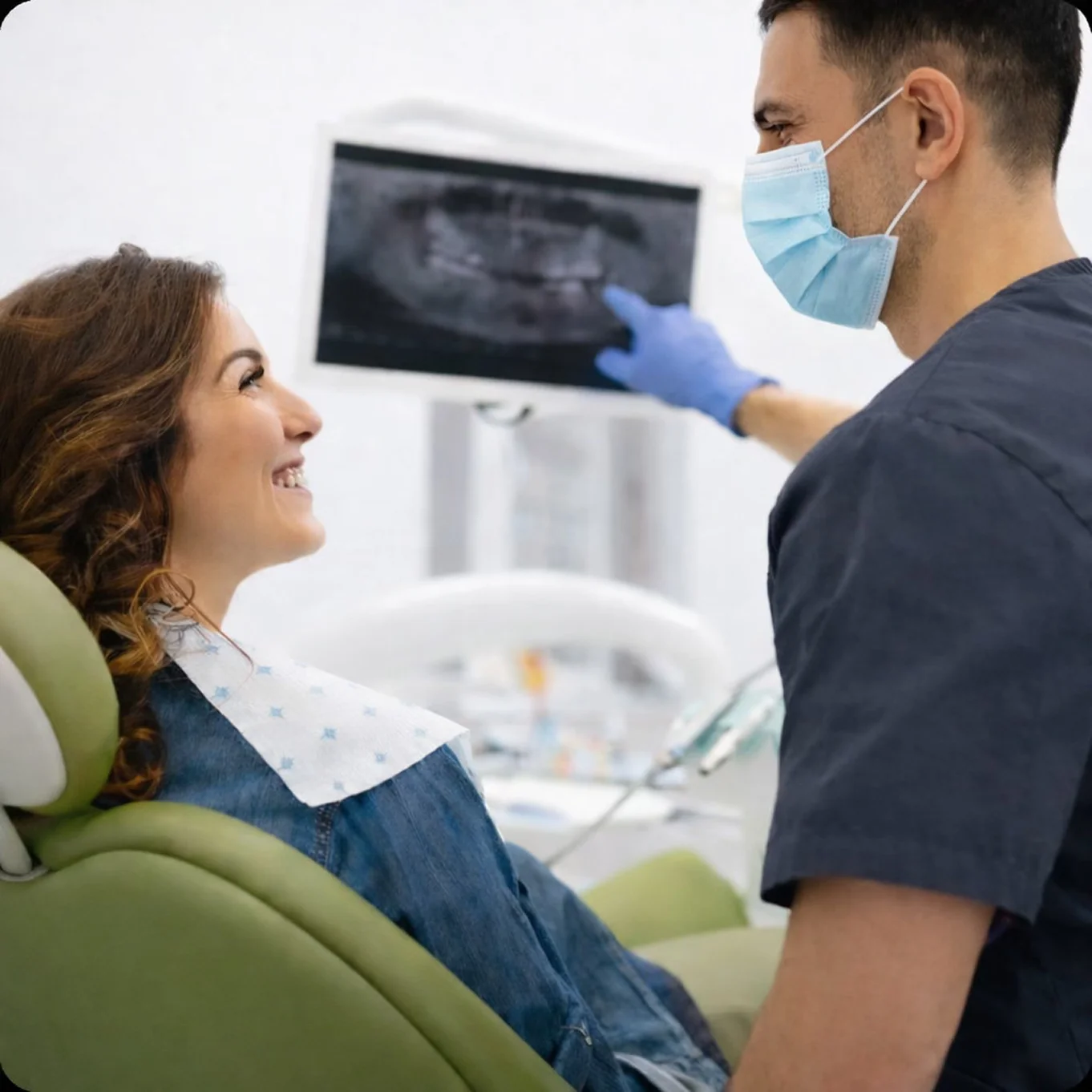
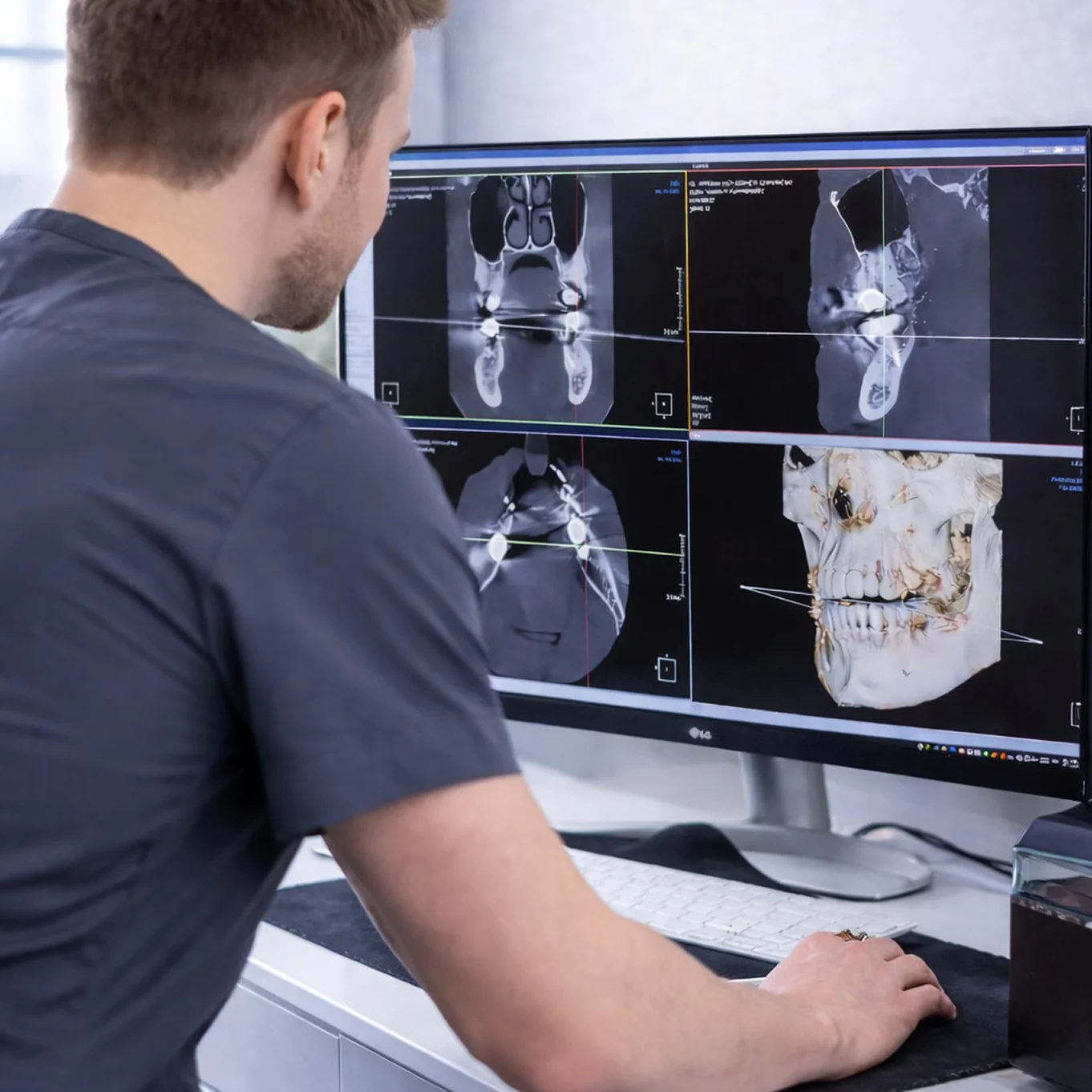
Before starting treatment, the dentist performs an examination, reviews CT scans, and takes a photo record to assess the condition of the tooth, root, and surrounding tissues. At this stage, we clarify your expectations, analyze your bite and opposing teeth, and determine whether a zirconia or ceramic crown is the best option. The result is a carefully chosen treatment plan designed to last for years.
/ 06

Tooth Preparation

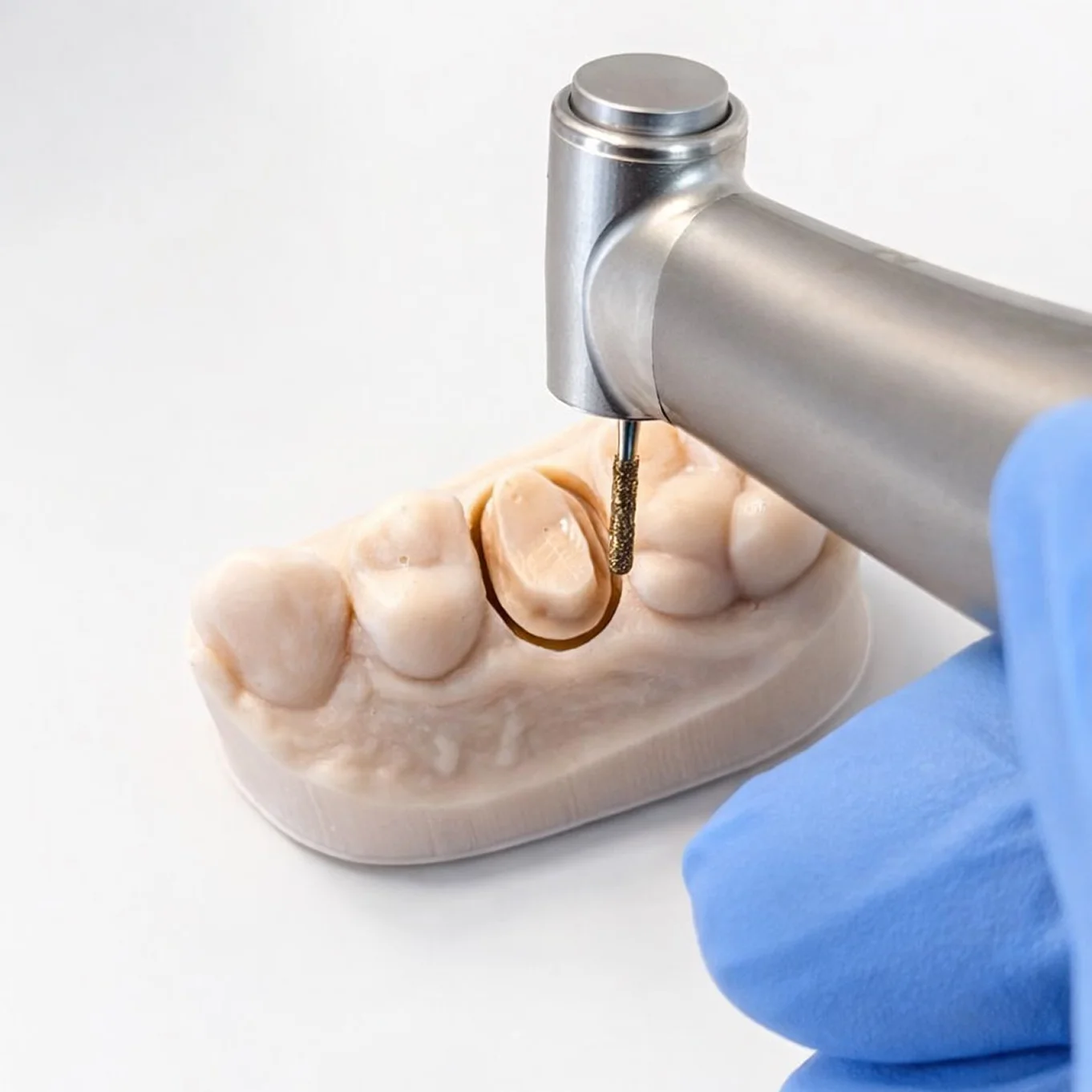
For your comfort, we use a single-use OptraGate to protect your lips and cheeks during the procedure. Next, an impression is taken for the temporary crown. The dentist then removes the affected tissue, treats the root canals if needed, restores the tooth with a post, and prepares it for the crown. This creates a strong foundation for the permanent restoration. If the tooth is already non-vital, the procedure is completely pain-free and does not require additional anesthesia.
/ 06

3D Scanning

After preparing the tooth, we perform a 3D scan of both jaws to accurately capture the bite and interproximal contacts. Next, we select the shade of the future crown to match your natural teeth as closely as possible. During the same visit, a temporary crown is made to protect the tooth, maintain aesthetics, and ensure comfort until the permanent restoration is placed.
/ 06

Laboratory Stage

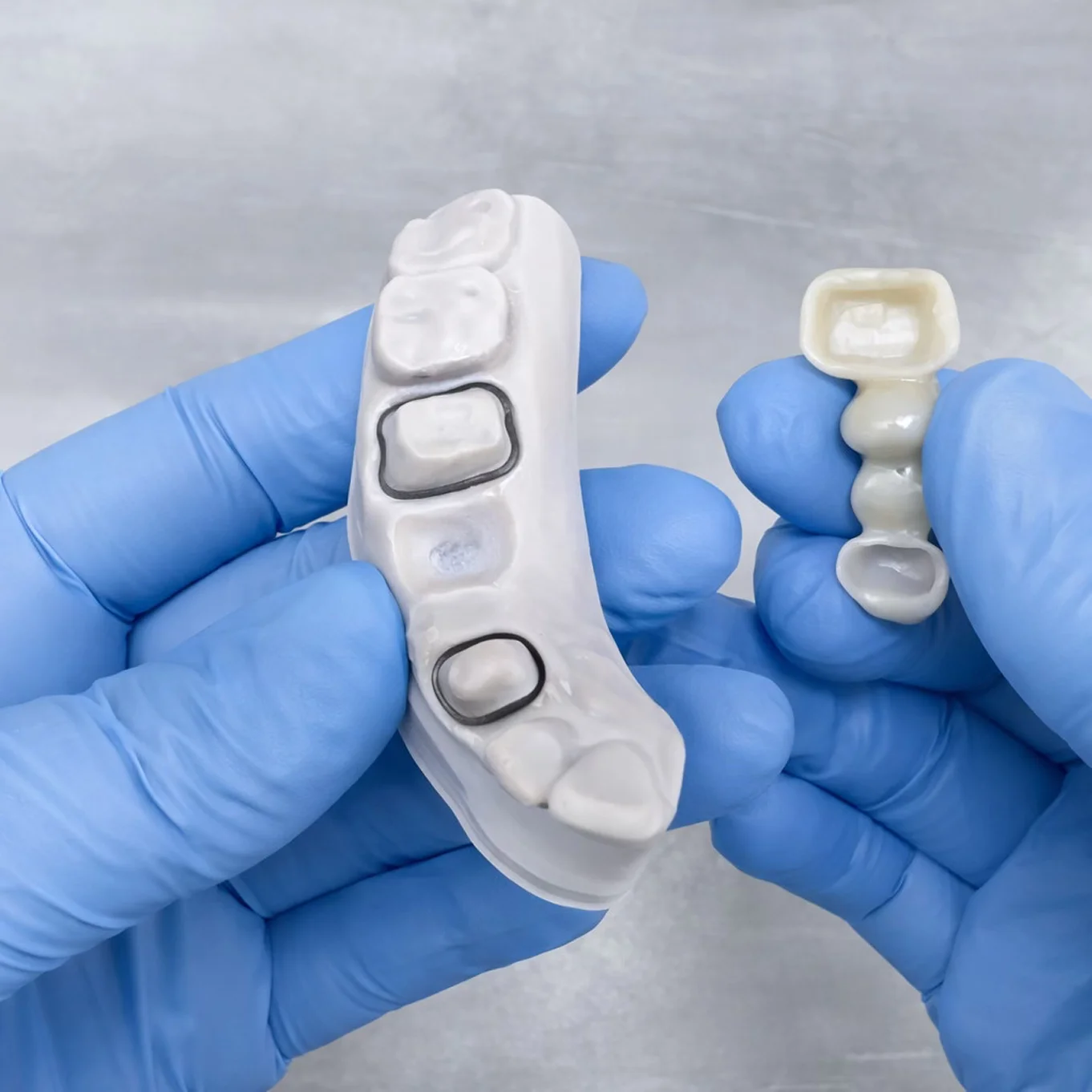
Using the digital scans, the dental technician models the crown’s anatomical shape in 3D to ensure proper chewing and even distribution of forces. The crown then goes through several manufacturing cycles, the number and sequence of which depend on the chosen material. This process ensures high strength, precise fit, and consistent color throughout the crown’s lifespan.
/ 06

Crown Try-In

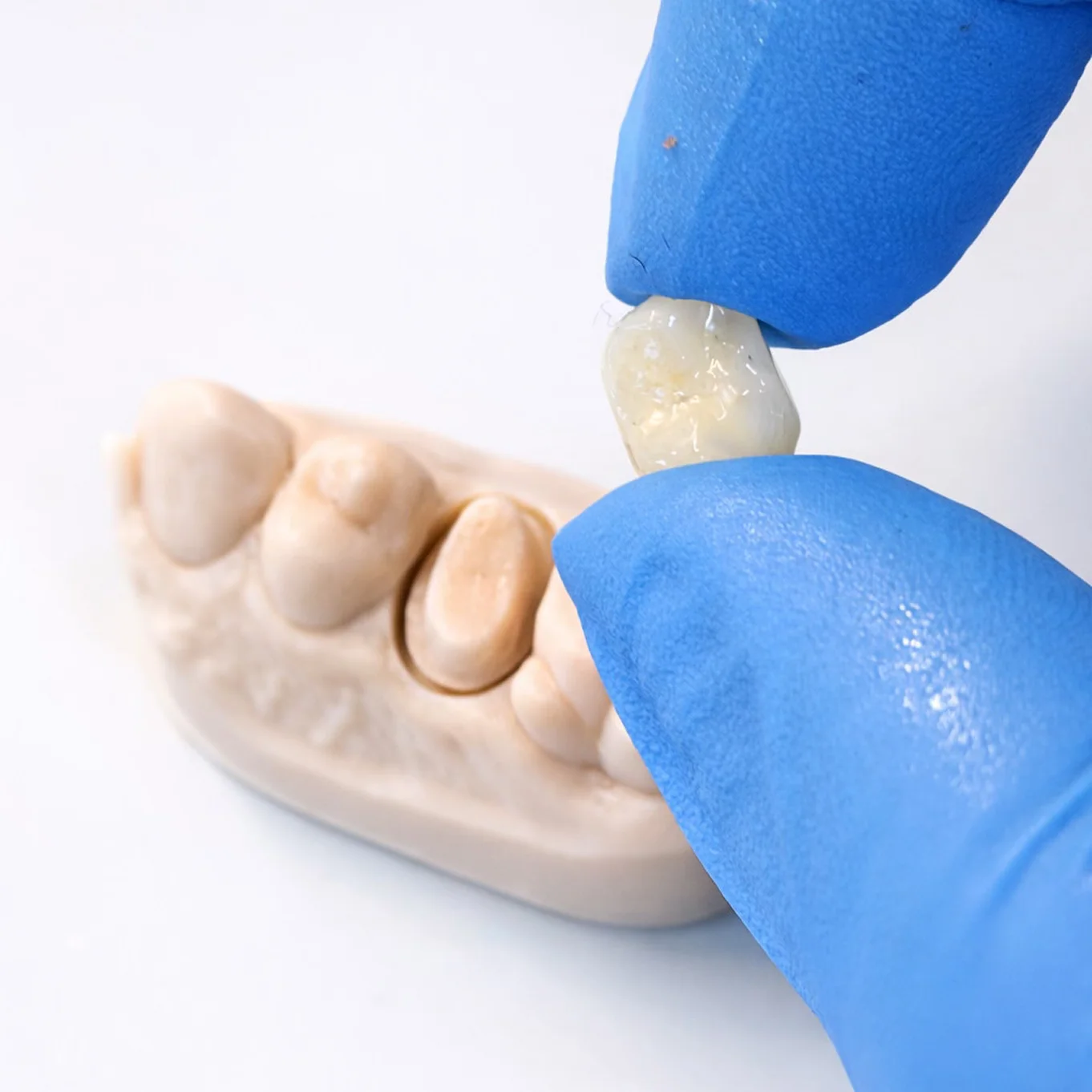
At the next visit, the dentist removes the temporary crown and tries in the permanent one. The fit, contacts with adjacent teeth, bite alignment, and color are carefully evaluated. If any adjustments are needed, the crown is sent back to the laboratory for correction.
/ 06

Crown Placement and Aftercare

Once the fit is finalized, the crown is cemented in place using a specialized dental cement. A final bite check is performed, ensuring no cement remains between the teeth or under the gums. After placement, we provide personalized care instructions and schedule preventive checkups to maintain the result for years to come.

Zirconia Bridges

scroll →
/ 06

Diagnosis

Before starting treatment, the dentist performs an examination, reviews CT scans, and takes a photo record to assess the condition of the supporting teeth, the bite, and the forces on the future restoration. Your expectations are clarified, and the suitability of a bridge is evaluated. If needed, additional preparation may be planned — such as reshaping teeth, orthodontic treatment, or removing teeth with a questionable prognosis. Once the supporting teeth are stable, we proceed with fabricating the bridge.
/ 06

Tooth Preparation

For your comfort, we use a single-use OptraGate to protect your lips and cheeks during the procedure. Next, an impression is taken to fabricate a temporary restoration. The dentist then removes the affected tissue, treats root canals if needed, and restores the supporting teeth with posts. Finally, the teeth are prepared for the bridge. If the teeth are already non-vital, the procedure is completely pain-free and does not require additional anesthesia.
/ 06

3D Scanning

After preparing the supporting teeth, we perform a 3D scan of both jaws to accurately capture the bite and interproximal contacts. At this stage, we select the shade of the future restoration to match your natural teeth as closely as possible. The supporting teeth are then covered with temporary crowns, which protect them and ensure comfort until the permanent restoration is placed.
/ 06

Laboratory Stage

Using the digital scans, the dental technician models the bridge’s anatomy in 3D to ensure even distribution of forces across the supporting teeth. The bridge is then fabricated from zirconia using CAD/CAM milling, after which the technician glazes and polishes it. This process ensures strength, precise fit, and stability for everyday use.
/ 06

Bridge Try-In

At the next visit, the dentist removes the temporary crowns and tries in the permanent bridge. The fit on the supporting teeth, contacts with adjacent teeth, bite alignment, color, and comfort while closing the mouth are carefully evaluated. If any adjustments are needed, the bridge is sent back to the laboratory for correction.
/ 06

Bridge Placement and Aftercare

Once the fit is finalized, the bridge is cemented onto the permanent abutments using specialized dental cement. A final bite check is performed, ensuring no cement remains between the teeth or under the gums. After placement, we provide personalized care instructions and schedule preventive checkups to maintain the result for years to come.

Implant-Supported Restorations

scroll →
/ 05

Diagnosis

Before starting treatment, the dentist performs an examination, reviews CT scans, and takes a photo record to assess the position of the implants, as well as the condition of the bone and gums. At this stage, your expectations are clarified, and the bite and forces on the future restoration are analyzed. Based on this information, the dentist selects the optimal type of prosthetic restoration, taking into account the clinical situation and long-term prognosis.
/ 05

3D Scanning

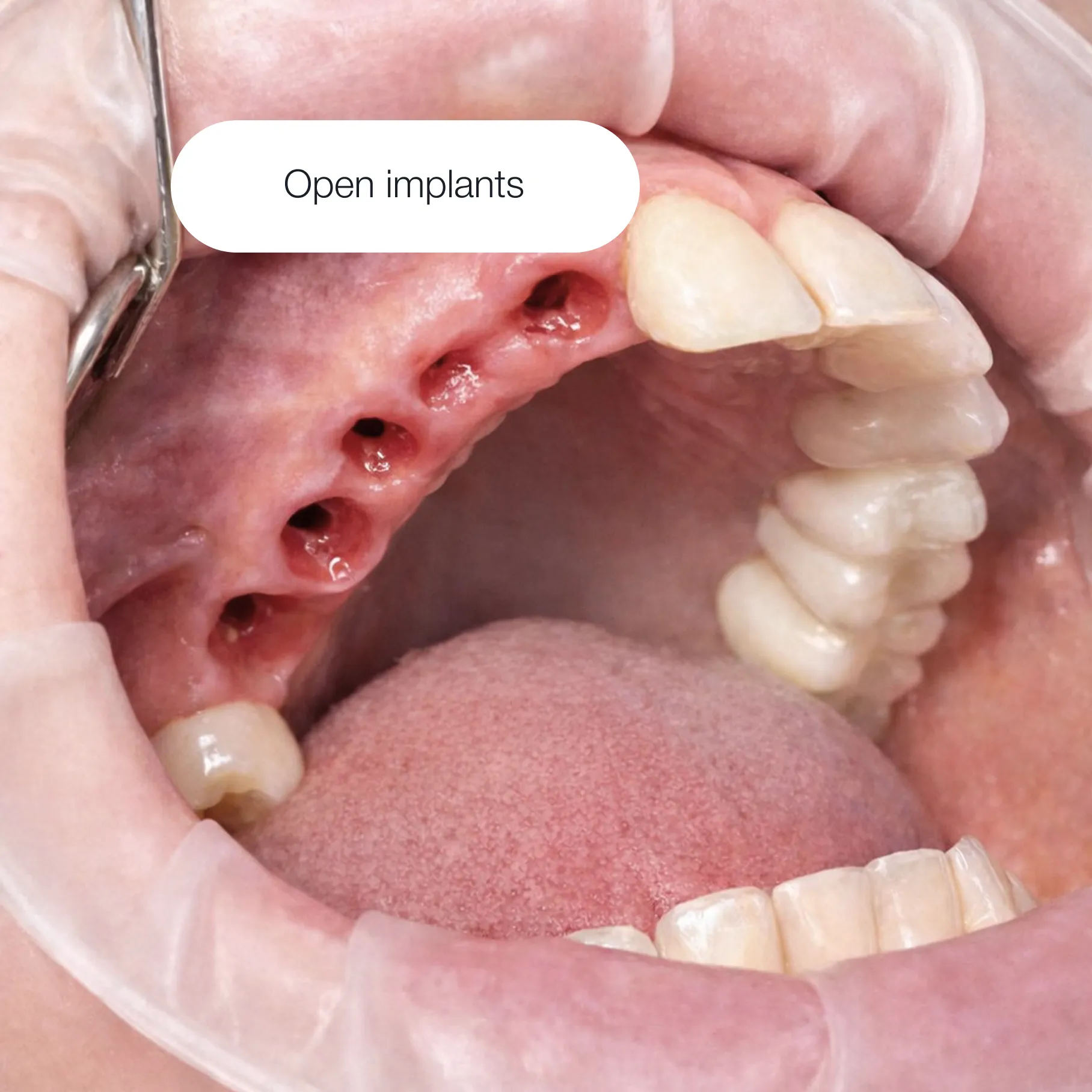
After the implants are uncovered by the surgeon, a 3D scan is performed to precisely capture their position in the jaw. This allows the prosthetic restoration to be designed with maximum accuracy, taking the specifics of your bite into account. At this stage, the technician finalizes the type of restoration, and the material and method of fixation are confirmed.
/ 05

Laboratory Stage

Using the digital scans, the dental technician designs the prosthetic restoration in 3D, taking into account your bite, chewing forces, and aesthetic preferences. The crowns or prostheses are then fabricated to ensure precise fit, high strength, and stability for everyday use.
/ 05

Restoration Try-In

At the next visit, the dentist tries in the final restoration and checks the fit, bite, and interaction with the gums. At the same time, the aesthetics are evaluated to ensure the result fully meets the patient’s expectations.
/ 05

Implant Placement and Aftercare

Once the fit is finalized, the prosthetic restoration is permanently placed, and personalized care instructions are provided. Regular checkups help maintain the stability of the restoration, healthy gums, and long-term comfort.
Cases

A confident smile and comfortable chewing are about much more than dentistry.

It’s the quality of life we create every day.
scroll →
Évora advantages

A healthy smile changes life, but the path to it should not be painful or exhausting.

At Évora, you stop being afraid of dentists — everything is organized so that your visit feels like an act of self-care, not a forced obligation.

Comfort in any situation

Orthopedic mattresses provide comfort even during long procedures. The air is continuously refreshed, making it easy to breathe in the treatment room — clean, fresh, and free from that typical “clinical” smell. Even during air raid alerts, you remain safe: we are equipped with backup generators and an underground parking shelter.

You always understand what happens next

The doctor explains the stages of treatment in simple, clear language, without complex terms. You receive a printed treatment plan clearly showing what will happen at each visit.

Control of all stages by the medical director

Your treatment plan is approved by the chief doctor, so you can be confident in the quality of the result.

Financial transparency

You know the full treatment plan and cost in advance — with no hidden fees or unexpected procedures.

European protocols

We work only according to proven methods. This means safety, predictable results, and no risky “experiments.”

Best equipment and materials

Digital scanning instead of traditional impressions, microscope-assisted work, and modern 3D diagnostics give the doctor a complete picture and allow maximum precision.

ÉVORA — A TEAM
THAT TRULY LOVES WHAT THEY DO

We show our patients how treatment can become a turning point for change:

— from dental health to the health of the whole body and a better quality of life.
Our doctors have many years of experience, work according to European protocols, and continuously improve their skills.

Nataliia Stepanchuk

Key areas:
Dentist–prosthodontist–therapist
crown placement, veneers, cavity treatment

Yevheniia Kiriukhina

Key areas:
Dentist–therapist
cavity treatment, professional cleaning, root canal treatment

There are more of us — not everyone has made it to the photo studio yet, we’re still working on it :)

Photo sessions are ongoing, the gallery will continue to be updated.

Pricing

Service Name
Price
General Prosthodontist Consultation – 30 minutes
850 UAH
Development of a treatment plan and financial plan based on an oral examination and CT scan analysis
900 UAH
Scanning of Both Jaws
1,750 UAH
Fabrication of a Temporary Milled PMMA Crown
1,650 UAH
Fabrication of a Zirconia Crown for a Molar
12,200 UAH
Fabrication of a Zirconia Crown for a Front Tooth
13,850 UAH
Fabrication of a Zirconia Crown on an Implant for Screw-Retained Placement
17,500 UAH
Crown Placement with Permanent Cement
950 UAH

Would you like to see prices for other services?
Click here

FAQ

Frequently Asked Questions About Crowns and Bridges

When Is a Crown Needed?

A crown is recommended when a tooth is more than 70% damaged, non-vital (without a nerve), prone to breaking, discolored, or unable to hold a filling. It’s a strong solution that restores the tooth’s shape, function, and bite stability.

When Is a Bridge Recommended?

A bridge is used when one or two consecutive teeth are missing, when an implant isn’t possible (due to insufficient bone, medical contraindications, or lack of space), or when the supporting teeth already have large fillings or crowns. The restoration restores chewing function and prevents the remaining teeth from shifting.

Do Crowns Look Natural?

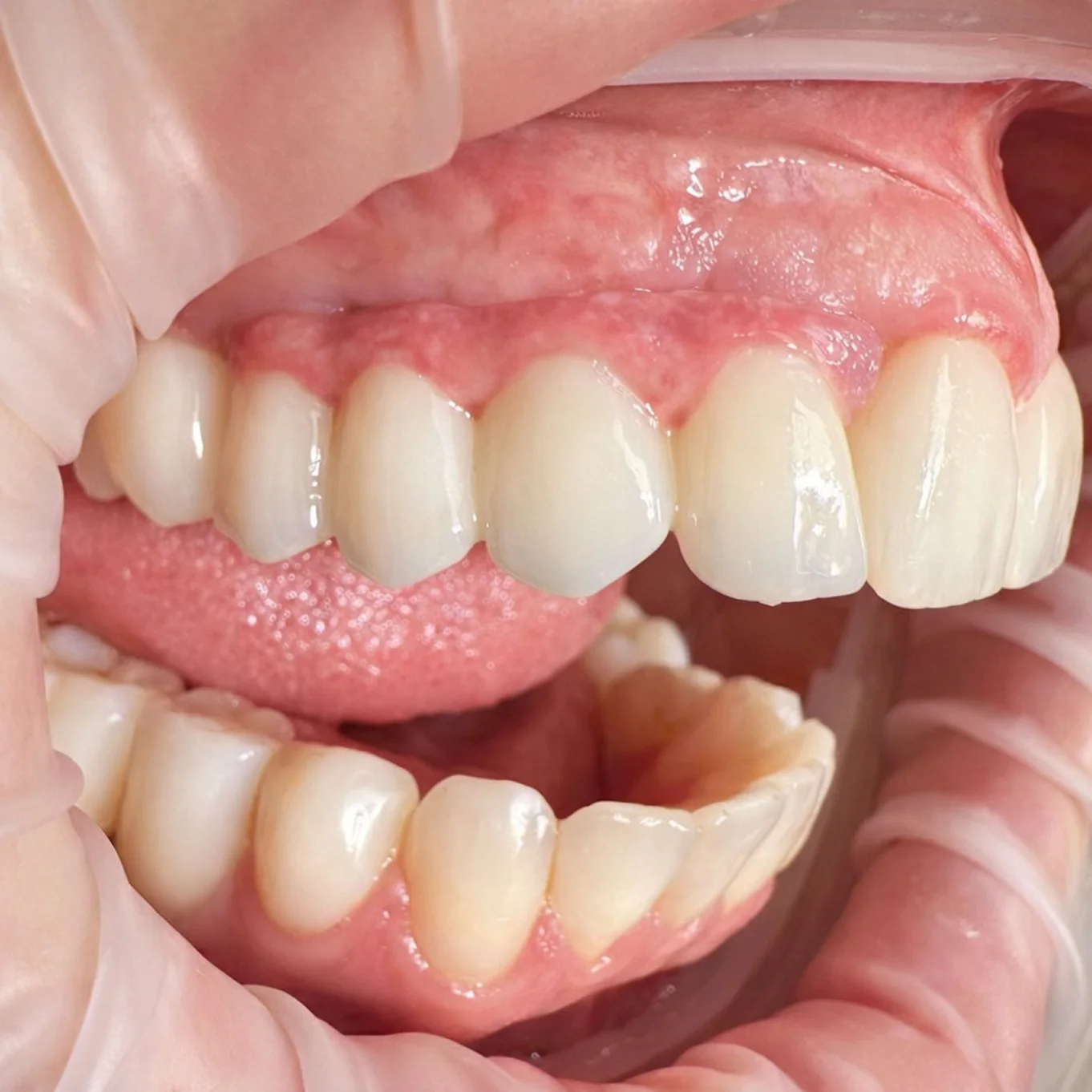
Yes. Both zirconia and ceramic maintain their color, don’t irritate the gums, and look just like natural teeth. Thanks to 3D scanning and the technician’s handcrafting, we precisely replicate the tooth’s shape, color, and proportions.

How Long Do Crowns and Bridges Last?

With proper care, zirconia and ceramic restorations last 10–15 years or longer. They are strong, wear-resistant, maintain their color, and preserve stable bite height for many years.

Does It Hurt to Place a Crown or Bridge?

No. Tooth preparation is done under anesthesia, and if the tooth is already non-vital, the procedure is completely pain-free and requires no additional anesthesia. For your comfort, we use an OptraGate to protect your lips and cheeks during the procedure.

How Is a Crown Different from a Filling or Inlay?

A filling is suitable for small defects. A ceramic inlay is used when more than 50% of the tooth is damaged. A crown is necessary for extensive damage (over 70%), a non-vital tooth, bite elevation, or when the full anatomy and strength of the tooth need to be restored. A crown provides the most durable and predictable restoration.

Is It Possible to Place Prosthetics on Implants That Were Not Placed at Your Clinic?

Yes. We provide prosthetic restorations for both implants placed at our clinic and those from other clinics. If needed, we can remove old restorations and replace them with new ones that are both functional and aesthetically pleasing.

How Much Does It Cost to Place a Crown or Bridge?

Prices start from 12,850 UAH and depend on:

- the material (ceramic or zirconia),
- the complexity of tooth preparation,
- the type of restoration
- whether root canal treatment or bite elevation is required

Before treatment begins, you’ll receive a final plan and a clear price with no hidden fees.